
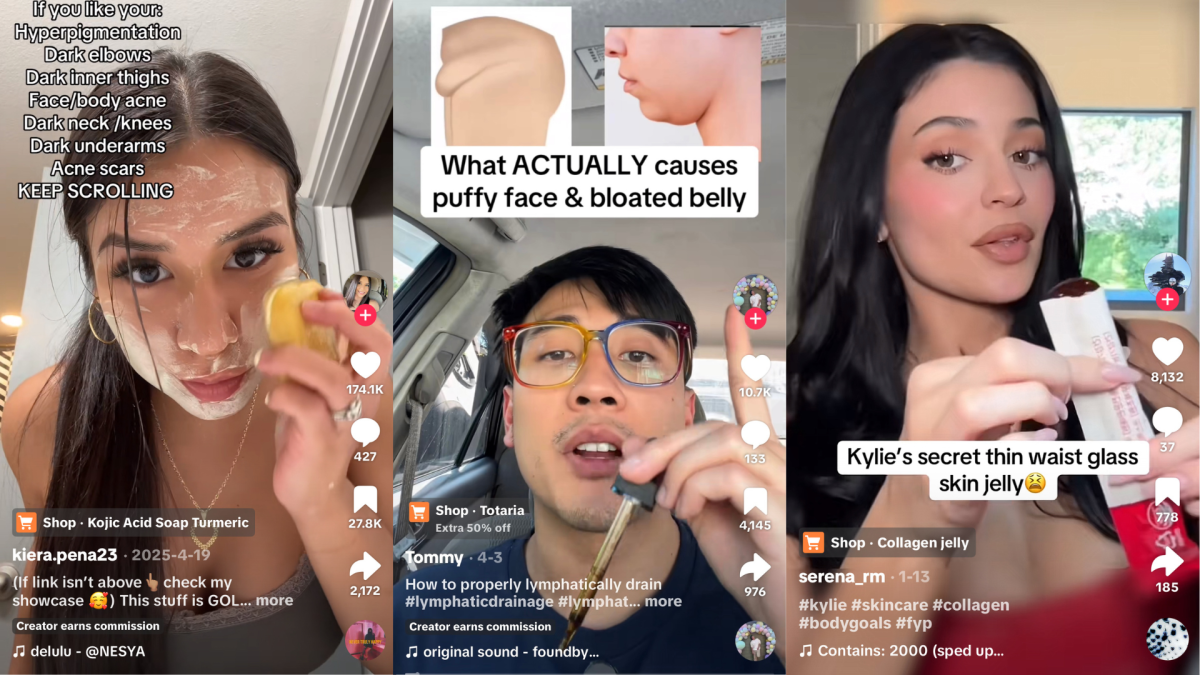
Since the late-20th century, digital media and online marketing has been an integral part of our everyday lives. Anything a customer could dream of is available at the touch of a button and on their doorstep within a week. And although this digital age reaps benefits such as convenience and accessibility, it also allows for brands to easily manipulate large-scale audiences. While some brands promote the genuine benefits of their products, others capitalize on the consumer’s “fear appeal” by offering solutions to problems they didn’t even know they had.
Because the strategy is so widely used, it can be hard to recognize immediately. And while it can appear in different forms, brands generally follow this same structure: It starts off by addressing a common annoyance such as bloating, fatigue, or oily skin. Then, the “magic solution,”—their product—is introduced and padded with buzzwords like “easy to use” and “works in seconds.” Lastly, their diction plays possibly the most important role. Brands like to incorporate clinical jargon or words like “hidden” or “lurking”, all with the goal of making the problem seem worse than it really is.
Though the tactic dates back to the early 1900s, one of the most prevalent examples exists within our everyday media. The TikTok Shop Affiliate Program, though launched with the shop itself in 2023, gained most of its popularity in 2024. This program allows creators to receive free products on the condition they promote the product in a video, and in return earn commission from the sales. When this program was first established, the TikToks being posted were conceptually the same; a simple video explaining the benefits of the product. But after over two years, nearly every ad has begun using the same, repetitive, fear mongering script no matter the product.
And while deceiving an audience in general is frowned upon, the specific audience that TikTok maintains makes this issue a lot more sinister. The majority of the platform’s audience is made up of young girls who, in their pursuit of identity, are considered one of the most impressionable audiences of our generation. By capitalizing off of their vulnerability, TikTok Shop and its affiliates are selling the idea that perfection can be bought in the form of a vitamin gummy or skin serum. Unfortunately, this phenomenon is far from new and, since the 1980s, teenagers have been one of the easiest targets in the world of marketing.
Still, like all other forms of advertising, there are drawbacks to catalyzing people’s insecurities . Consistently presenting danger is risky and can easily cross the line, either by creating a threat that is too alarming or introducing an overwhelming quantity of them. This can trigger the opposite effect, or the “flight response” and cause the audience to avoid the advertisement as a whole. And, in the case of TikTok Shop, when the threat becomes monotonous, its legitimacy is threatened and the audience is more likely to ignore it.
The most effective way to avoid this manipulation is knowing how to identify it and considering the many factors that make it insensible. First is to address the problem directly, what is it that the business wants the consumer to believe? Does the problem’s severity align with the probability of it happening? Then, to counter the loss aversion instinct, identify and consider the benefits that can be obtained from the product rather than focusing on what could be “lost”. Finally, pinpoint the motive of the speaker. Are they making this advertisement because they genuinely enjoy the product, or are they just trying to get paid?
Unfortunately, large-scale corporations will always prioritize profit over the well-being of their audience. And although utilizing fearmongering doesn’t necessarily make a brand evil, it’s more ethical to support a business that doesn’t have to manipulate customers into buying their products. Most importantly, recognizing the signs of fear mongering is the most effective way to re-establish control over what you consume.