
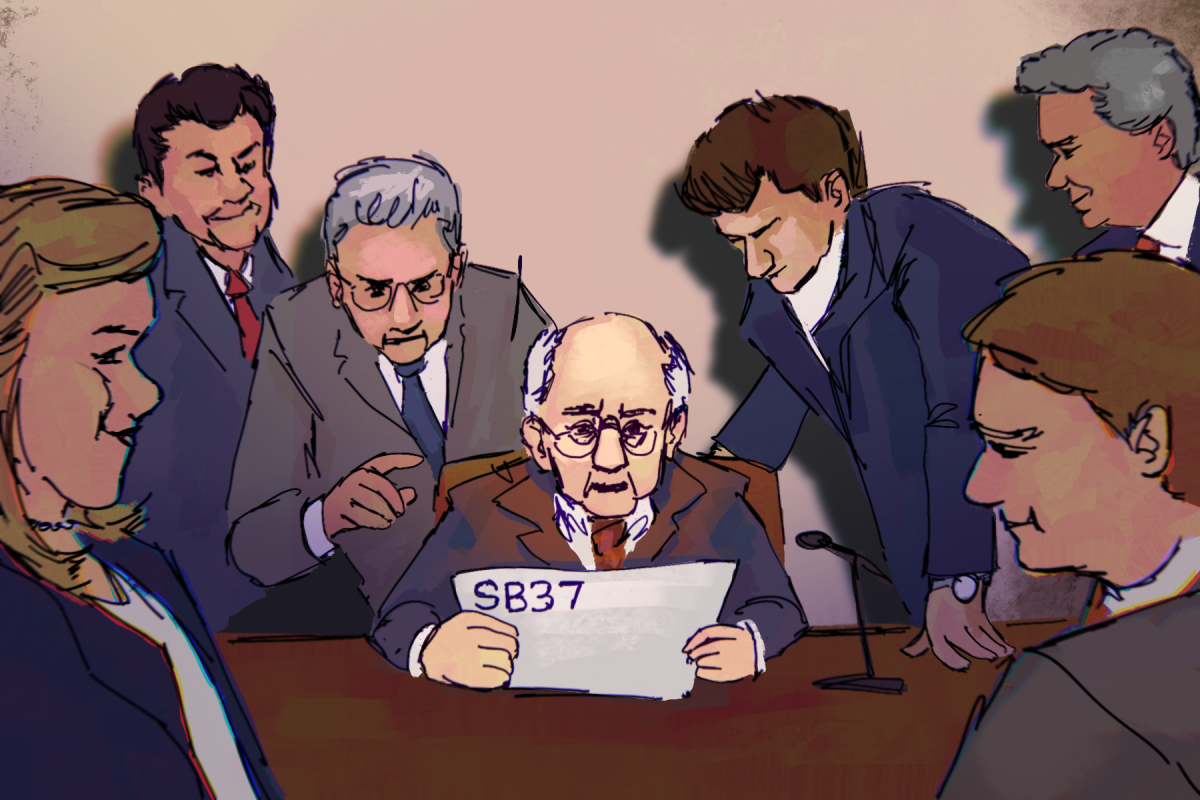
Texas has been tightening its grip on the content public universities may teach inside their classrooms. The Texas Legislature passed a bill in 2025 titled SB 37 that hands over more power to the University of Texas System Board of Regents, a board of 9 people appointed by the Governor and confirmed by the Senate who now hold the power to make decisions concerning curriculum. Since this law, universities have been able to impose their own restrictions on what may be covered inside professor classrooms, most often removing Diversity, Equity and Inclusion (DEI) content.
The staff asserts that SB 37 is a grave danger to free speech and indicative of the newest batch of laws attempting to restrict what is taught inside the classroom under the pretense of “preventing indoctrination.” Such censorship leads to weakened curriculum, narrowed scope and worldview, and promotes discrimination.
Firstly, by stripping curriculum in public universities of content surrounding (DEI), major parts of human history and the human experience are weakened. Without important content covering parts of history, such as the involvement of African-Americans in early American history. University professors, in an attempt to not violate this law, have pulled classes concerning topics such as Women’s Studies or Critical Race Theory. Because of this, the curriculum concerning human history is much weaker and cannot be constructed as precisely as a view of history without having important knowledge of past events and phenomena.
Similarly, this censorship of ideas surrounding DEI creates a limited worldview. By preventing teachings about gender, sexuality, race and other such topics, students are unable to receive a wider scope of the world. Whether the Texas legislature likes it or not, a vast array of communities reside in this state alone. People from Southeast Asia to Latin America have made Texas their home, providing education on various cultures is integral to an established view of the global world we see today. Along with this is the need to cover various queer communities, understanding and studying their impact and place in the world.
Perhaps most importantly is how SB 37 promotes harmful generalizations, whether actively or passively. By handing the control of university curriculum and policy over to government appointed regents, biases can run rampant as students and staff no longer have control over what they wish to explore academically. It cannot be expected for a board of nine people to account for nuance at every university in the state. They also, unchecked by any system other than the government that put them into power, may pass sweeping changes to the university system, once again harming the many who have no say in these changes. Overall, the Board of Regents is not a win for the many centers of secondary education here in Texas.
SB 37 consolidates the power of decision making to a group of people not chosen by students, staff, and many other beneficiaries of universities. The decision to crack down on DEI topics, censor research and studies and keep the power to decide in the hands of a few people does immense, widespread harm to public universities. SB 37 is not a positive for the state and should be challenged in the court of law to once again reinstate systems that allowed for strong curriculum, expanding worldviews, and beneficial classwork nuance.