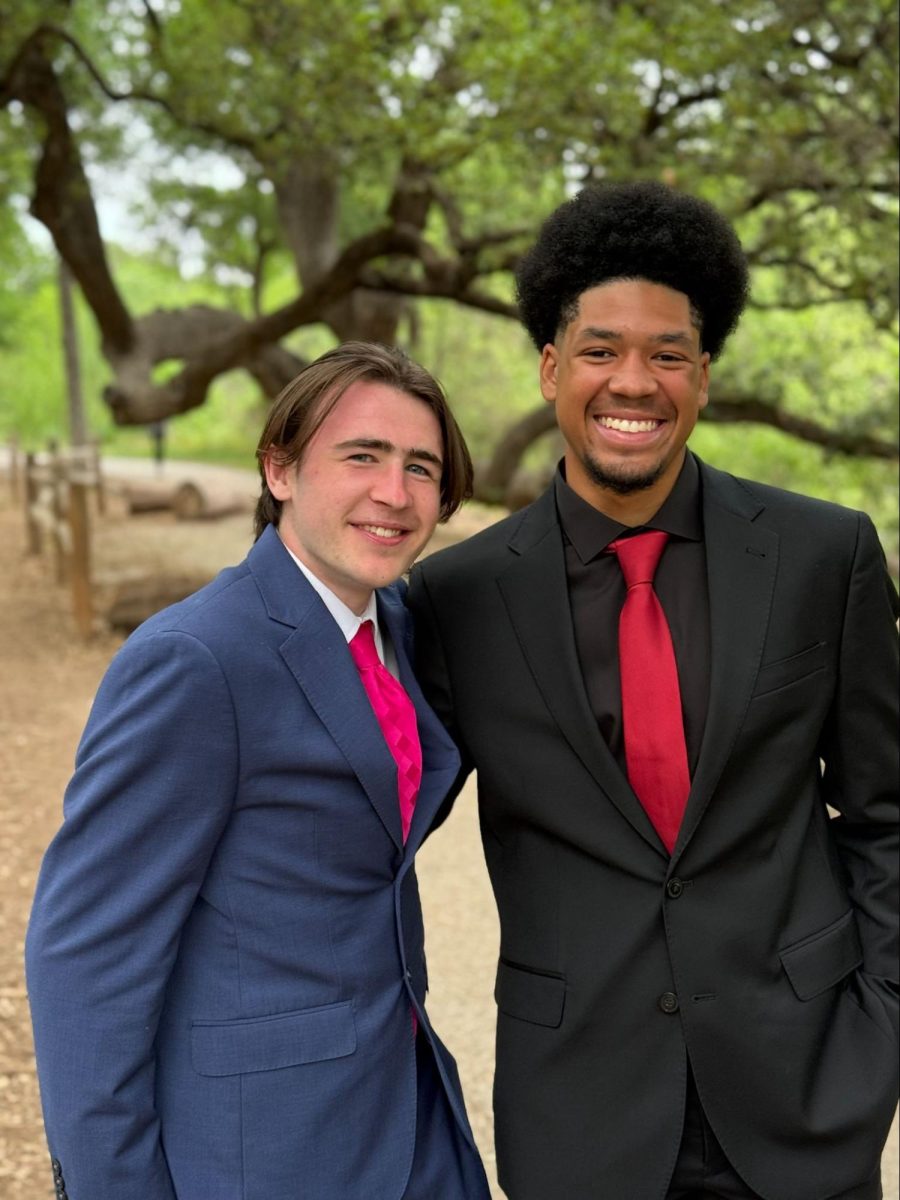
2012 Olympics, gymnast Gabby Douglas competes in the vault, uneven bars, balance beam, and floor exercise and is the first Black woman to win the all-around gymnastics gold medal. Watching her compete over the summer, senior Alex Faris recreates her moves – rolling, jumping, and flipping around the house. His cousins, who are in gymnastics, recommended to his mom for him to be put in gymnastics.
“I thought watching them do gymnastics looked so cool,” Faris said. “Gabby was the person who I first understood gymnastics from. What solidified my gymnastics was Simone Biles, when I watched her in 2016.”
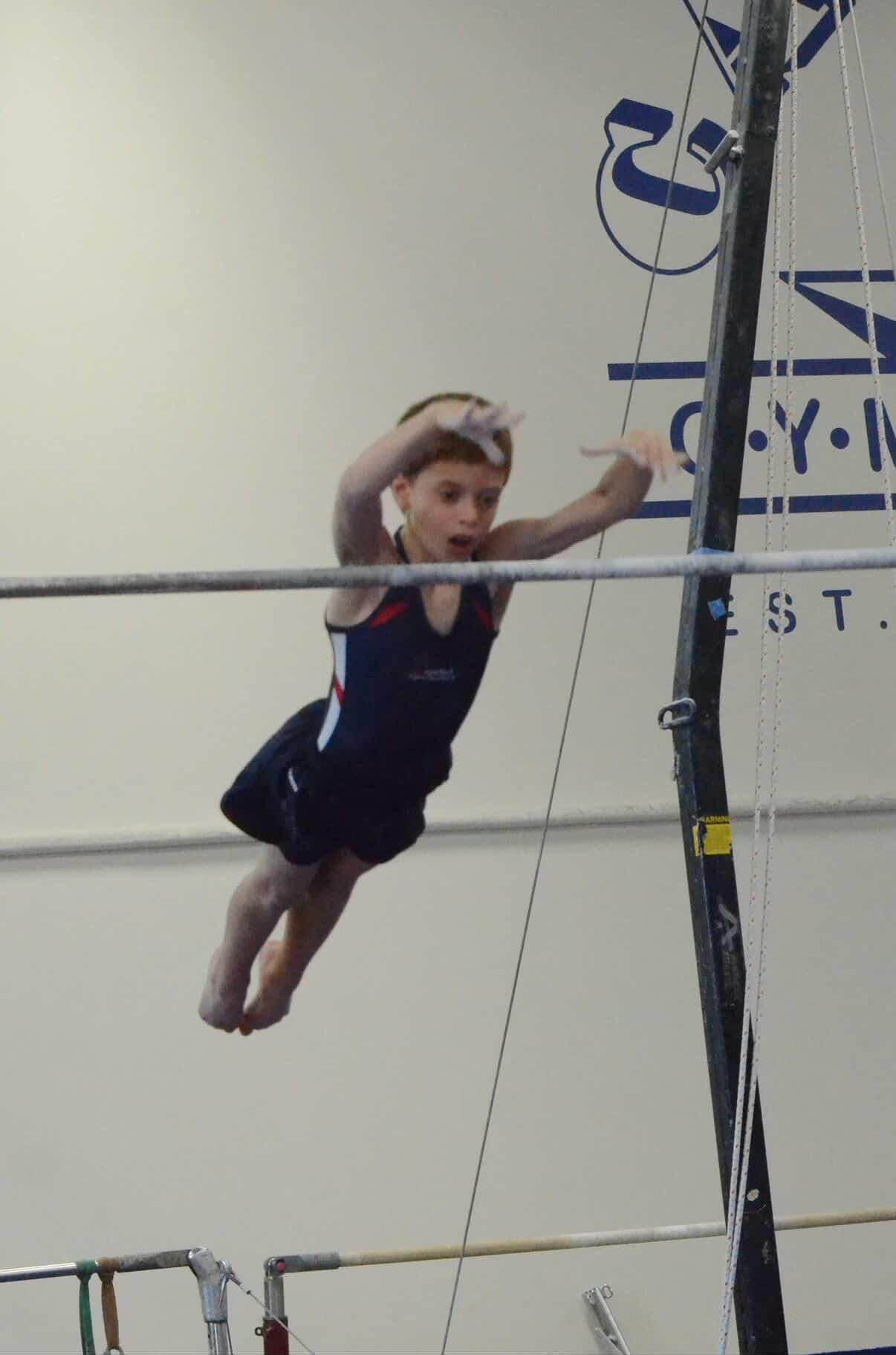
After his family constantly watched him tumbling around, they decided to put him in gymnastics when he was five at Capital Gymnastics Pflugerville. Faris started in a girls class due to his mom’s work schedule. When she got her schedule alternated, he was able to be in a boys class, Dynamites, with the ability to move up throughout the levels.

“I didn’t understand what I was getting into,” Faris said. “I was there for fun. I had the natural gymnastics ability,” Faris said. “[When] I was seven years old, I could do a standing back tuck on the floor. I genuinely was on [an] Olympic pace.”
Faris’ coaches have always had a plan set for him. Level all the way up, go to the Olympics, train, and then be a gymnastic coach himself. Faris received placements of top three at every competition, reaching to winning state. This plan fell short when Faris got Avascular Necrosis (AVN) in his elbow from overusing his elbow at the age of 10. Avascular necrosis is when a part of the body doesn’t get enough blood flow and a part of the bone rots.
“I pushed through the pain for two months and didn’t tell anyone,” Faris said. “It was really tough because that was my whole life. It was tragic. I was crying, my mom was crying. I thought I was gonna go to the Olympics.”
While Faris was in Dynamites, Faris was coached partly by Coach Bo up until he stopped Dynamites.
“He’s my inspiration for coaching tumbling,” Faris said. “He was trying to get us better, but he was really hard on us. You need to be hard on us, especially for a team. I see myself as him, he’s in my path that I want to go through. I got a lot of inspiration from the other two coaches that I had as to how I should present myself during my coaching.”
Going into middle school, to cope with the news, Faris began to compete in different sports. He played football, basketball, and ran track.
“Track was the one I really liked the most,” Faris said. “Hurdles felt the most like gymnastics because you have to move your body to a certain position. Hurdles made me forget the feeling of loss from gymnastics. It was a good substitute [and] it gave me something else to focus on.”
Faris got the job offer in 2022 at the age of 14 because he knew the manager. At first, he started off doing summer camp as a counselor for two years then transitioning to coaching beginner classes. After a year of coaching beginner classes he advanced to becoming one of the main coaches.
“When I first started I was not confident at all,” Faris said. “When I had a group, the kids wouldn’t listen and I’d have to get another coach. It was embarrassing. Over the years, I’ve built it up. I didn’t understand because I wasn’t trained, so I didn’t understand what I was supposed to be teaching. I was doing drills I used to do, but I didn’t know [the] actual body positions that I was supposed to be hitting.”
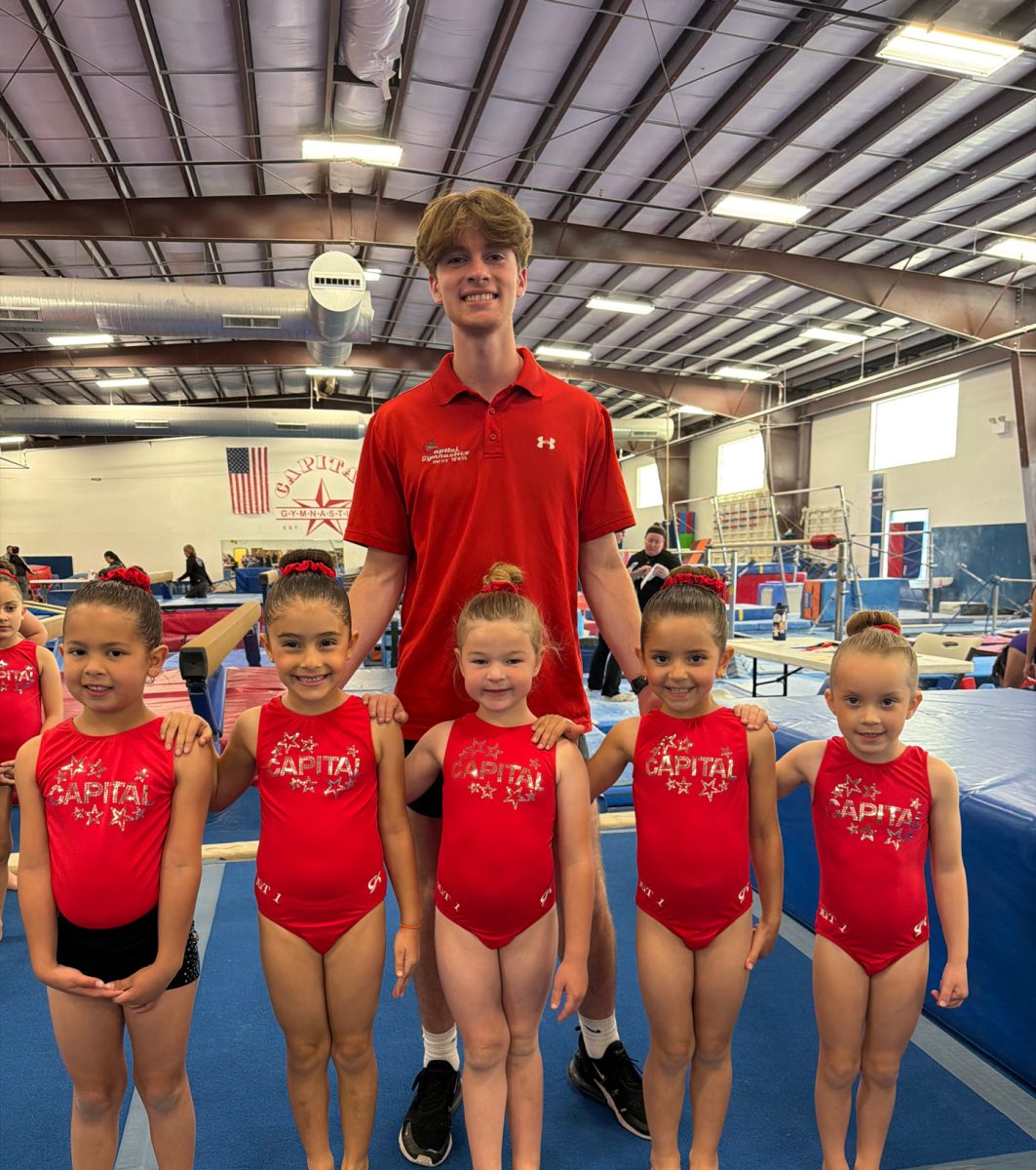
Faris coaches classes with a max size of eight, ranging from ages five to 17. He coaches all levels from beginners to advance. He now trains with the team coaches at the Cedar Park location.
“I was really scared at first, but now all the kids on the team like me,” Faris said. “I feel a little more confident. It feels good because it’s getting me towards my end goal, which is to own a gym, so [it’s] moving me in the right direction.”
Faris said that working as a coach has increased his confidence by a lot, constantly being in front of the students.
““[It’s] like public speaking almost because I have to talk loud,” Faris said. “[I’m] more confident in what I do because I know what I do at work. The kids pick up on if you’re not confident. If they see you’re struggling, they run off and do nothing.

“It’s good, it’s just with school I get a little burnt out sometimes,” Faris said. “I just remember that I’m making my name. I remind myself why I’m doing it and what I want to do in life, that it is worth it to work. If I have track in the morning, I am always really tired. After school, I’ll just tell them I’m a little tired today. Also, I love my job, so it gives me an energy boost when I’m there. I have a class that I enjoy, so I don’t care how tired I’ll be, I’ll feel better.”
Working with children at the ages of five to 17, not all of them have the confidence to perform new drills.
“You have to ease them into anything,” Faris said. “You have to dumb it down and then go slow. Go back to basics. If we’re trying to do a back handspring and you’re scared to go backwards, let’s learn a backwards roll, so we’re not scared to go over our head first. Just get them comfortable with doing skills that lead them up to the bigger skills. When you give them the basics [and] when they start doing the actual skills, they’ll feel the drills and they can squeeze their body how they’re supposed to.”
Along with them not having the confidence, children often have their bad days – Faris having to put up with it.
“I just tell them [that] I understand you don’t want to do this, but, this is something that parents pay for and something that I want you to do. I want you to get better. If somebody’s just really angry, I’ll just sit down and give them some empathy. I’ll help them out and then it will be good.”
Being the youngest coach, Faris is looked down upon by other coaches because he is more talkative to the students than the other coaches. Also, the students sometimes think they can do whatever because he is talkative.
“If you want to be like a leader to them, you have to be confident with the kids,” Faris. “You have to know what you’re doing, how you’re doing it, [and] what we’re doing next. If you’re not, then the other kids are not going to respect you as a coach. I think a lot of the kids think that I’m the number one show coach [and] I’ll let them do whatever they want.”
Recently, Faris went through a time where he noticed his classes were stuck and making no improvement.
“I thought I was being a terrible coach,” Faris said. “I had to do more conditioning because I struggle with seeing the right body positions. If they don’t have the natural ability, it’s really hard to motivate myself to try and get them better. I have to find the confidence in myself to keep working with them.”
Faris plans on going to college at ACC, majoring in business administration to learn all the business aspects. He will also continue to work as a gymnastics coach, working his way up to owning a gym. When he gets to the general manager position, he will use his business degree to start his own business. Having this job is his first step to his future.
“I think because I’m so fun and happy at work, a lot of the kids will say I want to coach too, he’s having so much fun. I wanna have fun. Also, a lot of them like doing gymnastics and I really hope I do have a lasting impression.”