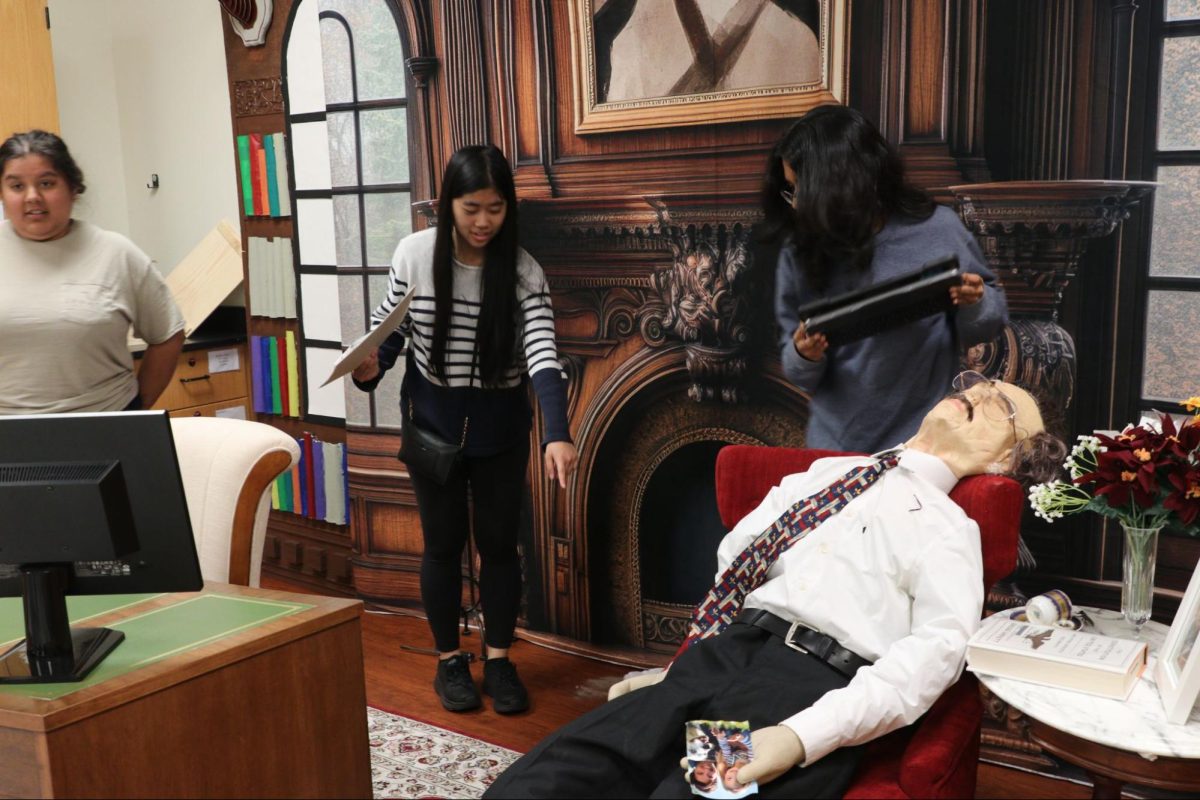
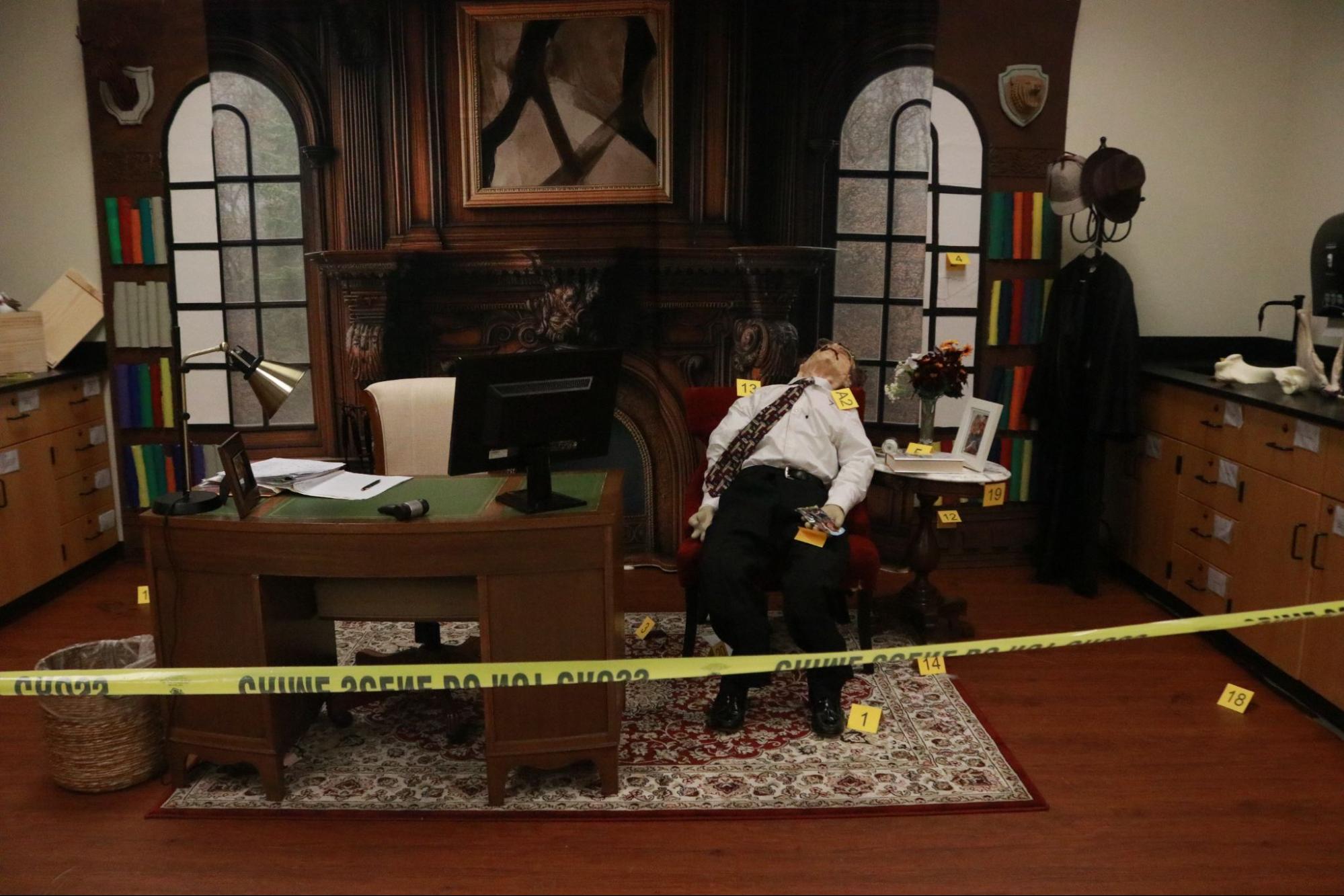
As forensics continues the case, the progress they have made is great. Starting in late September, students began investigating a complex mock case centered on the death of Judge Holmes in his office. What began as a cornered-off scene of chaos has since been transformed into a scientific study, as the class works to piece a story that only the evidence can tell.
Now, with the investigation coming to a close, the focus has shifted from initial discovery to deep analysis. By bridging the gap between classroom theory and crime scene reality, these students are uncovering the data that will eventually bring this case to its final conclusion.
The case started with students responding to a staged disturbance and securing the scene. The students practiced taking photos, logging names, and deciding if a crime had been committed.
“This activity goes just beyond fun, it’s giving us a real taste of what actual forensic science looks like,” senior Alyssa Miller said. “Our teacher treats the setup like an authentic crime scene, reminding us constantly to be careful where we step and repeating “DO NOT TOUCH THE BODY” at least five times a day. Her level of seriousness makes it feel like we’re a part of a genuine investigation.”
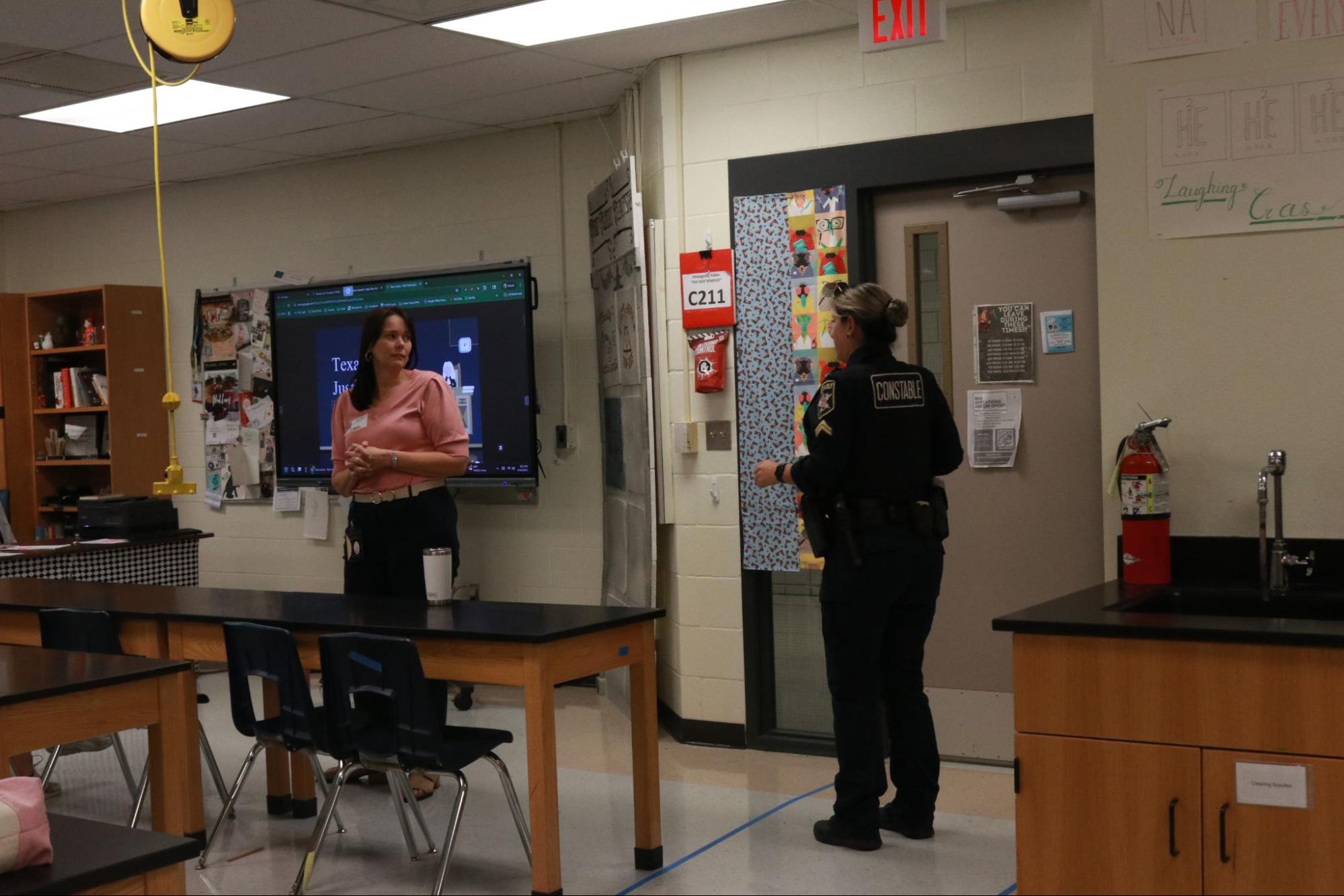
The legal system was taught to students by guest speakers Judge Holmes and her constable at the end of September. Both speakers discussed what their responsibilities were and expanded their knowledge for their crime scene lab.
“It felt a lot more engaging and credible, since they do their job for a living,” junior Tuscany Morthole said. “They also have experience, and can give good examples to show and tell us, to help us learn and gain the information then just having to learn off a slide or readings.”
After that forensics students began sketching their crime scene project. Students had to use investigative skills, creativity, and critical thinking to convert what they see into a drawing they can use for their map of the crime scene.
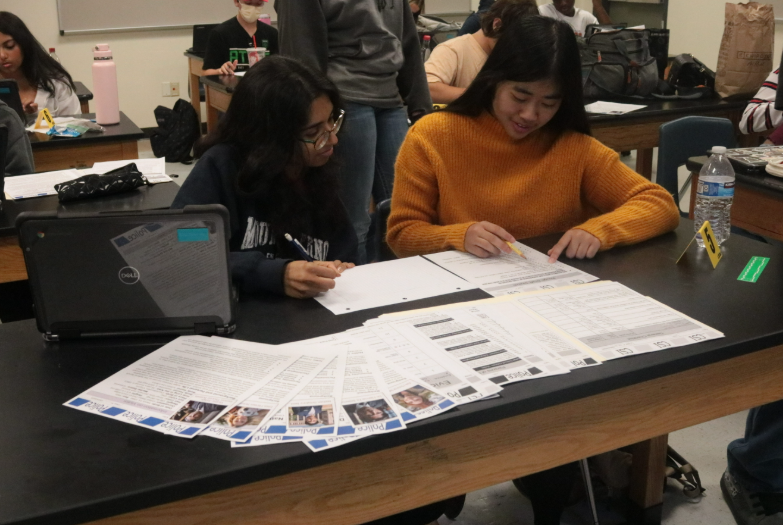
“As we learn how to analyse different types of evidence we will take any evidence from the crime scene that pertains to that lesson,” forensic teacher Carol Seng said. “Then learn if that was a helpful piece of evidence and can we use that information to figure out what happened that day.”
Their sketches took time to perfect as students then finalized their initial sketch, to draft what they have seen and learned so far, in early October. The sketches needed to be as detailed as possible to better assist the students during the rest of the project and require for students to look very close at the scene to notice every little detail.
“I have had a student, while taking a closer look at the scene, mention that the daughter might have cut her father out of her life,” Seng said. “[And mentioned] that he still deeply loved her evidenced by the many pictures of the Judge’s daughter everywhere in the space including a well worn picture of him with his daughter as a child in his hand.”
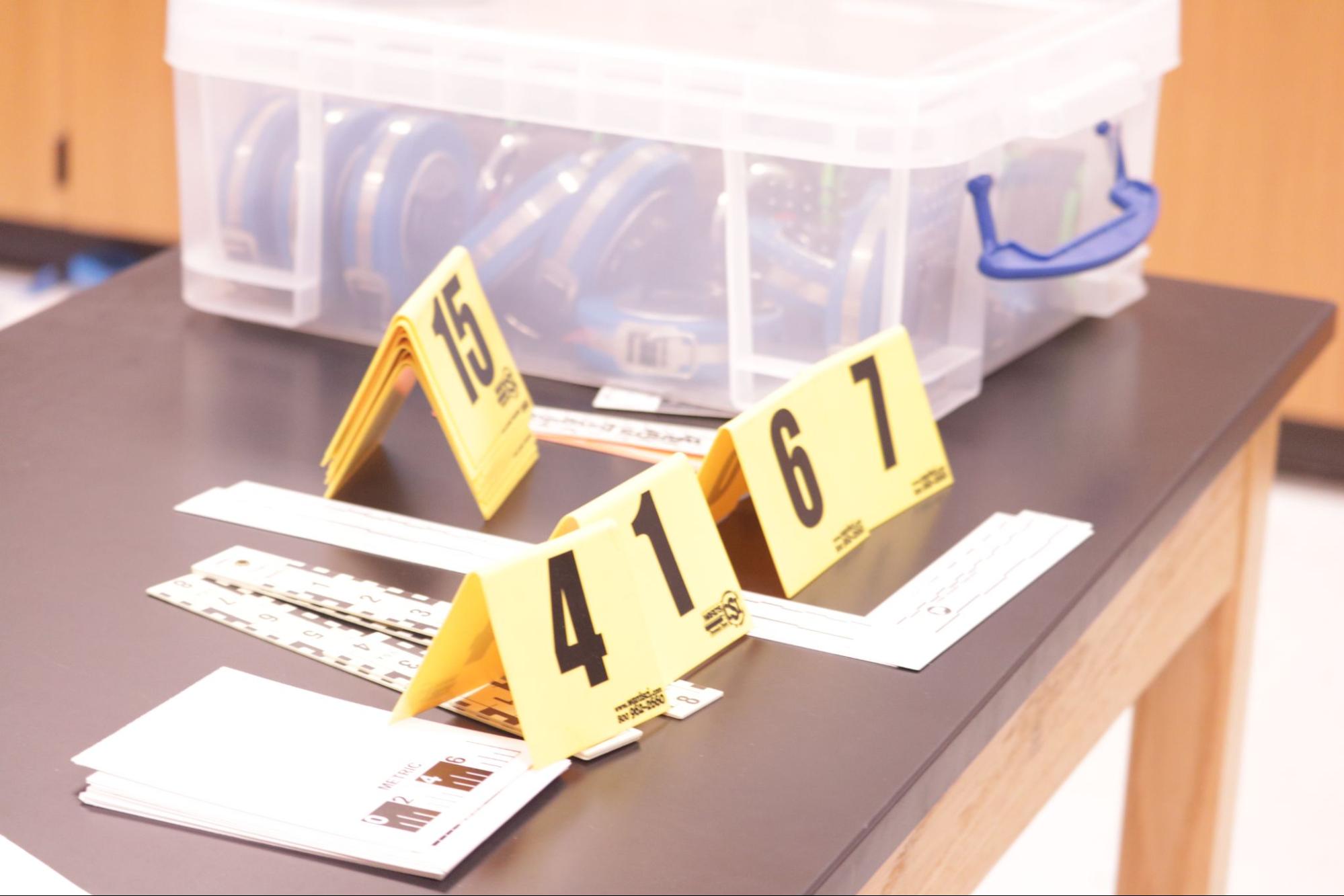
Finalizing their sketches around mid October, the class worked on making accurate sketches with correct proportions and measurements so they could use it during the rest of their investigation. Students were able to learn how important organization is during this part of their crime scene project.
“You can tell Seng put a lot of thought into every part of it, from the evidence to the backstory,” senior Rachel Abraham said. “It is exciting to get to sketch such a detailed crime scene.”
Students shifted from documenting and collecting evidence to analyzing what they gathered in their investigation in mid November. Light microscopes were used to examine hairs and dissecting microscopes to study fabric fibers and weave patterns to sort out people of interest.
“This seems much easier for them,” Seng said. “I believe students have been exposed to the use of microscopes before and the idea of seeing their hair and other hair samples makes sense and can see the relevance of matching the evidence hairs to known samples.”
The forensic classes then readjusted their focus from hair to specific fibers in the fiber lab where they performed tasks such as examining microscopic hair, plant material and fabric to determine how each piece may connect to the victim, suspects and the crime scene itself.
“We got to see what a crime scene has which helped it feel more real,” Morthole said. “By allowing us to see more detail of what happened with our victim when and after he passed.”
Next, students examined impressions that were possibly left behind during the crime like potential fingerprints on a firearm, note, piece of chewing gum, picture frame, fingerprints on a tea cup along with lip prints on a tea cup, possible toolmark from a flat head screwdriver. Students learned how to take molds of this evidence.
“TV leads people to believe that nice complete fingerprints are easy to find but they are not,” Seng said. “[Seeing students’ learning process] makes me feel that all the work that I put into a year long project is worth it. This is the time of year that I think this is too much work and when most students seem to be enjoying it I think I might do it all over again next year with a different story.”
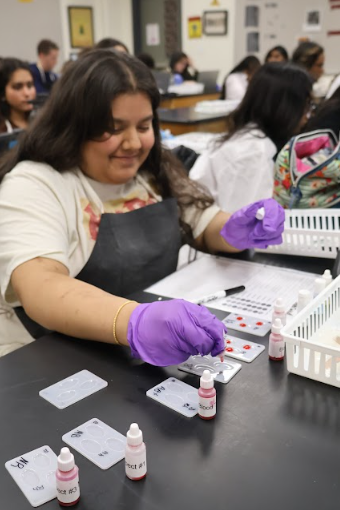
As the spring semester started students began their blood typing lab to examine biological evidence to narrow down suspects. Students studied the ABO blood group system and the Rh factor while working in pairs.
“In serology we remind students of what they have learned about DNA and how we inherit it from our parents and show them what part of the DNA that information is found,” Seng said. “When we do DNA analysis then I identify what part of the DNA that is found on and how those sequences are analysed. All that to say, serology is a great way to scaffold into DNA analysis.”
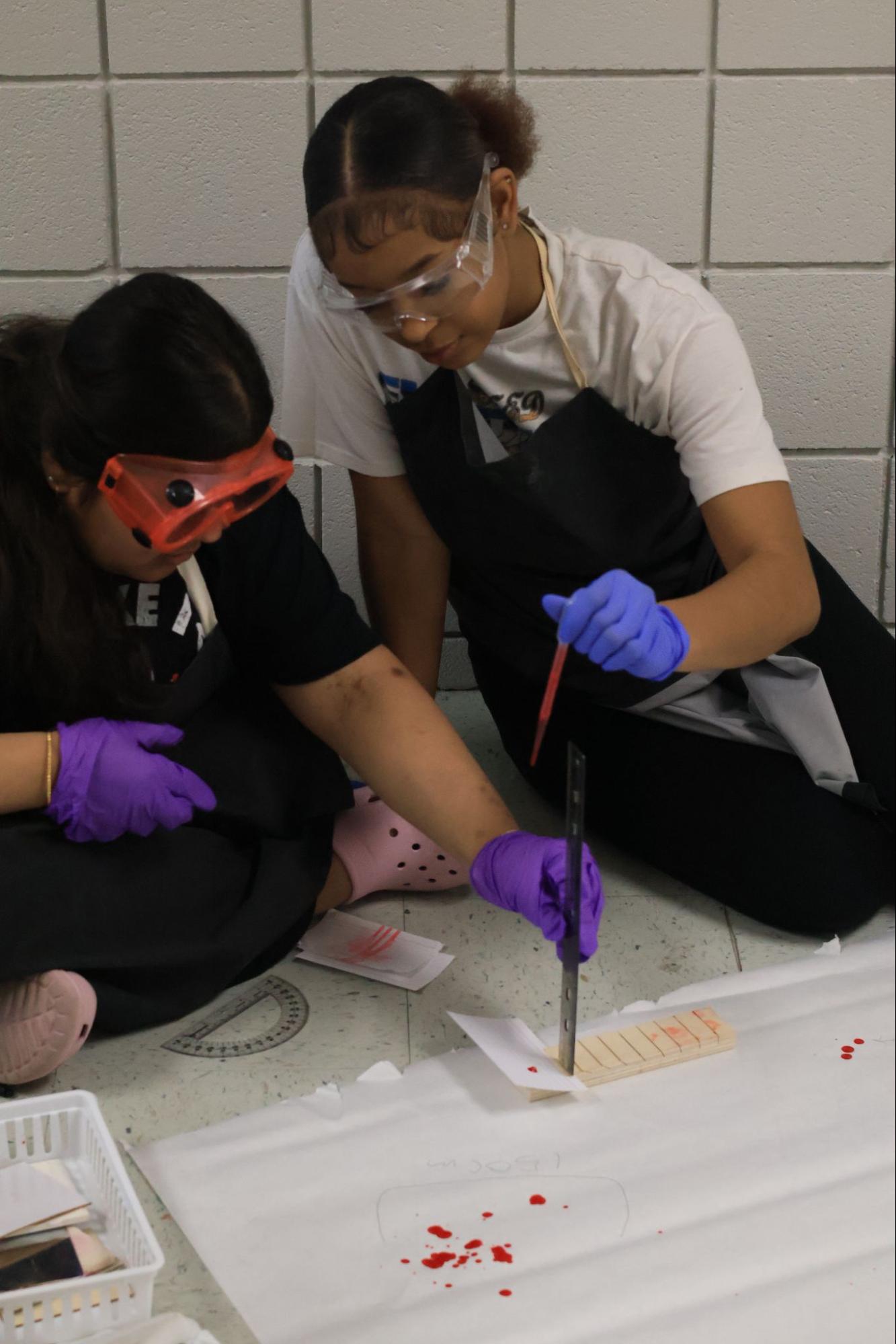
While using their knowledge gained in blood typing to complete their blood splatter lab in early February to identify what played out with the victim during the crime.
“[The lab] is a great way to engage students into blood spatter, it allows students to internalize how height affects diameter of blood and angle affects blood,” Seng said. “[My favorite part was] watching blood land on galvanized steel.”
In the courtroom students got to apply their knowledge in a mock trial. Students took on roles ranging from plaintiff and defendant to expert witnesses and jurors.
“It was really fun being able to analyze a case and pick a side,” senior Megan Nguyen. “The judge also gave her verdict at the end of the mock trial and it was super interesting to see her thought process.”
As students stepped into the ballistics unit they brought together everything they have practiced throughout the year, applying earlier skills to a more complex piece of evidence. Instead of looking at clues in isolation, they begin using firearm markings, bullet structure and trajectory analysis to interpret how a scene may have unfolded. It becomes one of the final steps in the crime scene case, where careful comparison and attention to detail are key to forming conclusions.
“The ballistics lab was really interesting, and getting to see what evidence actually is when talking about bullet casing or gunshot residue,” Morthole said. “I am invested to put together the pieces of the Judge Holmes case.”
With only a few labs left, the focus begins to shift from learning individual skills to connecting them. Fingerprints, trace evidence and ballistics are no longer separate lessons, but pieces of a single investigation that students must interpret as a whole as students will wrap up the case on May 15 and 16.
“In a couple of days we will review all the evidence that has been analysed all year and write a final report on what we know about the case,” Seng said. “I sure hope my students enjoyed the Judge Holmes case and that it was worth the amount of work that went into it.