
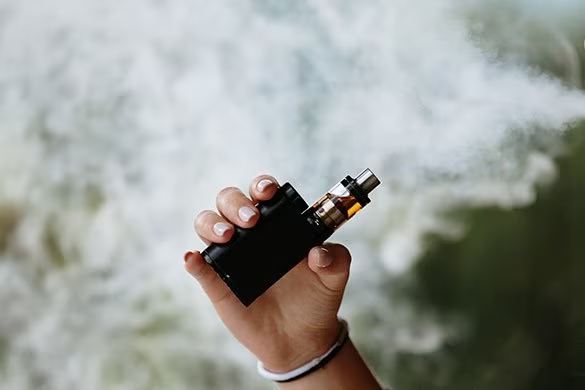
For the past few months, both the upstairs A and C wing bathrooms have been locked and unavailable for student use. Despite the “Closed for Maintenance” signs plastered on the doors, students and teachers alike speculate these restrooms are off-limits for a different reason: vaping.
Linked to serious, chronic lung injuries, vaping is the act of inhaling and exhaling chemicals through a hand-held battery-powered device to achieve a “high” or “buzz” effect. Although only popularized in the past decade or so, approximately 1 in 4 U.S. teens report daily usage of e-cigarettes (vapes).
At McNeil, vaping has been a growing issue among students for years. Every day, lines form outside the restroom doors due to students using the stalls to vape instead of for their intended purpose. Not only do students just vape in the restrooms, but many students report witnessing the selling and buying of vapes and/or other drugs in the bathrooms as well. Although this is a school-wide issue, the upstairs restrooms specifically fall victim to these kinds of problems due to limited supervision from teachers and APs.
Because of these reasons, many suspect that the real cause behind why the upstairs restrooms are closed is to prevent students from vaping. Although this approach to the issue seems appropriate, it is nothing more than a temporary solution to a permanent problem. Instead of actually addressing and working to fix the vaping crisis, the school’s administration has decided to simply sweep it under the rug.
Closing the restrooms that students are known to vape in may seem like the right thing to do, but this actually poses a multitude of other issues that expand beyond just the school’s restrooms. Students having to walk across the school to relieve themselves; lines forming out the doors to the restrooms; paper-towels overflowing from the trash cans; students being tardy to class because all the stalls were full; these are just some of the consequences of the school’s decision to lock the upstairs restrooms. Although some might argue that these are the natural consequences for students who vape in the restrooms, locking the bathrooms doesn’t prevent students from vaping — it simply encourages them to hide it better. Students continue to vape in the downstairs restrooms, in their cars, secretly in class, and any place they can without getting caught.
Instead of simply ignoring it, the school’s administration should focus on addressing and solving the problem; offering healthier alternatives to students who struggle with addiction rather than encouraging them to hide it better. Heavy drug use in adolescents can occur for many reasons; whether it’s to fit in with friends, cope with stress and anxiety or an escape from trauma and/or abuse, it’s important to validate and support students struggling with addiction rather than enabling and ignoring them.