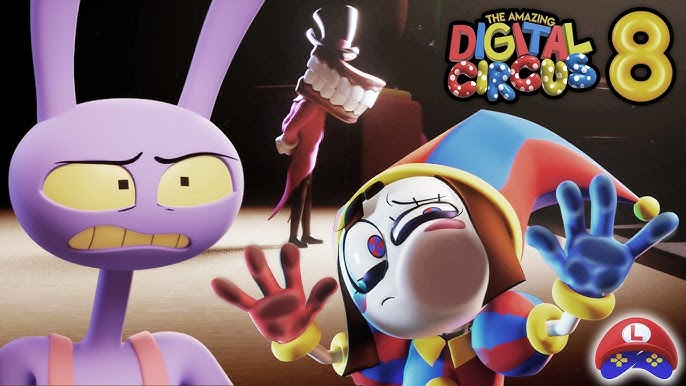
In just three weeks, episode eight of “The Amazing Digital Circus” has surpassed 80 million views, and episode nine is going to reach theaters in June.
The indie animated show (indie being used to describe a project produced from a small team not associated with a typical corporation) from Gooseworx and GLITCH Productions has a large fanbase, evident in the high view count. In fact, half of the episodes from the series have over 100 million views on YouTube, not counting the views garnered on Netflix.
This success is massive for indie animation. The other animated shows on GLITCH’s channel haven’t reached the same numbers as “The Amazing Digital Circus”, but the pilot episode for “Knights of Guinevere”, one of GLITCH’s recent projects, has 18 million views on YouTube.
“Lackadaisy”, an indie animation, made by Tracy Butler, has a similar amount of fame. “Ramshackle” by Zi Chen has nearly 10 million views. “Pretty Please I Don’t Want to Be a Magical Girl” from Kiana Khansmith is sitting at four million views, despite not being an animation at all.
These are just a few of many success stories of indie animation. So the question here is why? Why is indie animation blowing up left and right?
To start, it is important to consider each project’s point of origin. They all got their starts on the internet. The internet is a medium that is not only accessible, but is also free to open. In an age where most shows are locked behind streaming services, a show posted on YouTube for no fee is an incredible alternative. Not only that, but their accessibility and internet origins make them able to spread easily.
Another reason for the growing fanbase for these shows is that they have a distinct identity because of their nature as a product of passion by a small group of people, if not one person. This helps the creative expression of a story flourish because of the freedom that comes with not being attached to a major corporation.
For example, Dana Terrace had a major complication in the creation of “The Owl House” because of Disney. Disney cancelled the show during its production, leaving the show’s final season with three longer episodes rather than giving Terrace the room to make the ending she had intended.
But, with an indie show such as “Knights of Guinevere”, Terrace has full control over the show direction. This includes episode count, pacing, character direction and themes. This may seem small, but it’s huge for these small studios, since large studios often meddle with the creative direction of a project, which may harm the story overall.
The final reason is that the support is more likely to affect the quality of the project. For example, “The Amazing Digital Circus” recreated a shot from the pilot in episode eight where the main character, Pomni, looks into a mirror. The lighting was much more dynamic and real when compared to their original product. This is partly due to a smaller team working on these indie shows rather than on a corporate project. With a corporate project, there are so many people to pay. Writers, producers, directors, actors, animators, but that does not guarantee quality because of the executives who run the company who want to turn a profit. With an indie project, there’s a small batch of people who fill these roles. They get paid, but since there is less pressure to turn a huge revenue, that money is more likely to go into the quality of the project.
This is why indie animation has so many modern success stories. They provide a unique and quality experience without requiring any sacrifices by the consumers. It’s wonderful to see these projects flourish. The world is scary for creatives, and there’s no guarantees for stability, but these stories of success certainly bring comfort to the idea of chasing a passion project.