
Hosting Cocoa and Croissants, Willy Wonka Day, a Middle East Timeline, Amy’s Ice Cream, and student panels, librarians Laura Falli and Amelia Lewis create different events and lessons for students to attend. The library events range from goal planning to inviting guest speakers to talk to students.
“We want kids to check out books, but it’s good that they feel like there’s a place for them to be able to come down and let things go a little bit before they move on to their next class,” Lewis said. “Kids will come in if they have a stressful day and we recognize that.”
The library, built in 1992, was later changed to the Jinx Lacy Memorial Library, becoming a main place for students to connect and be exposed to new ideas.
“It’s a space for safe learning [and] self safe exploration, but it’s more than just books and computers,” Falli said. “We want it to be a center where the kids just come. We want the kids to have a good experience. The library and the cafeteria are the only spaces that are for every single student. Not every student is an athlete, not every student is in band, but everyone uses the library. We’re here for everyone, and we just want everyone to feel welcome.”
Falli started working in the library in 2006, working as a librarian since 1997. Previously, she worked in special education and at a middle school in Dallas, Texas.
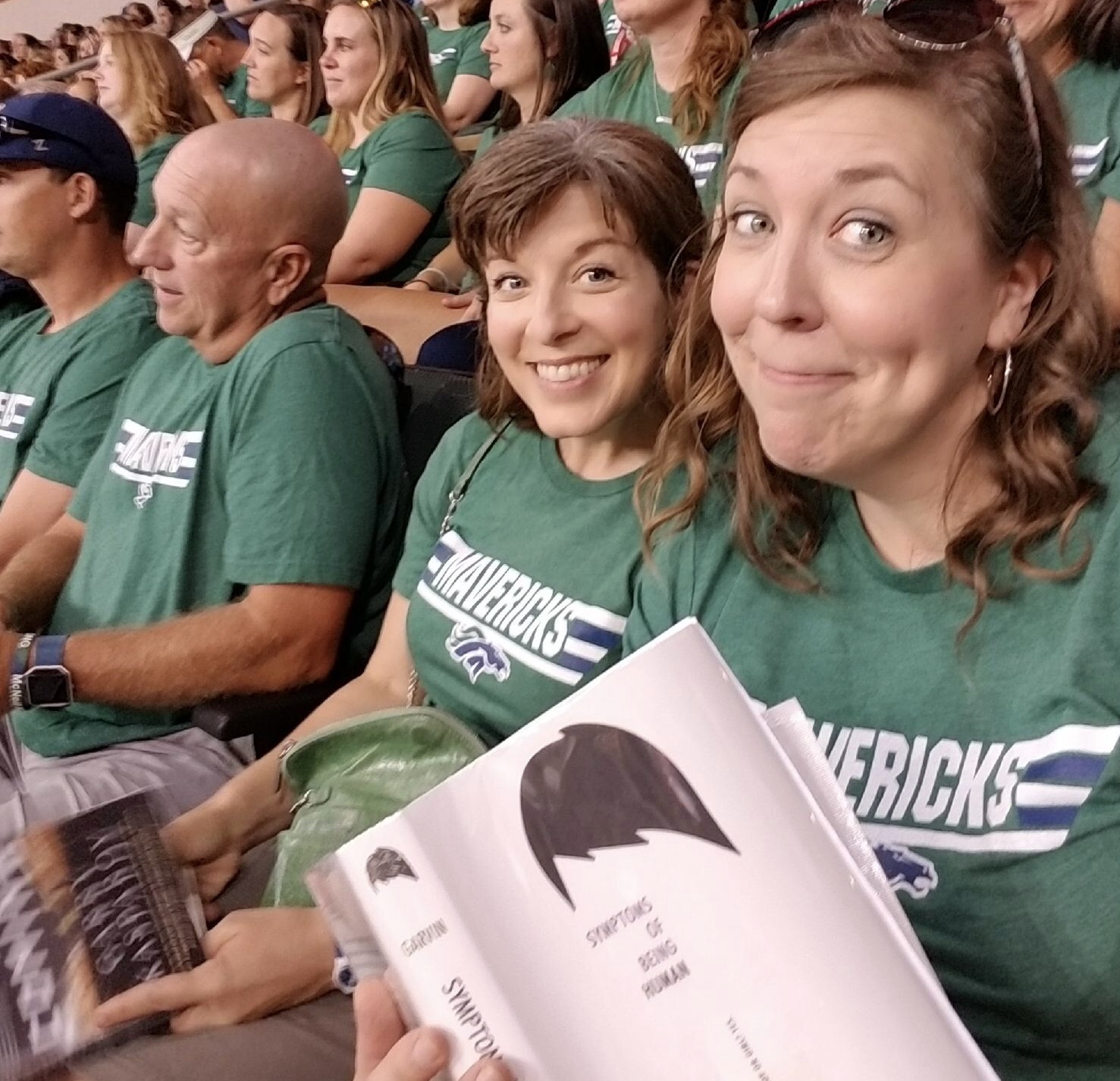
“Knowledge is power, so I want everyone to be critical thinkers, then be able to think and evaluate things critically,” Falli said. “You need to be exposed to many different ideas and topics, that’s how we learn to think critically. That’s why I’m a librarian.”
Lewis started at first as an English teacher in 1999 for eight years before moving to a librarian position at Robertson Elementary School. When a librarian spot opened at McNeil a year later, Lewis took it.
“If I had just stayed at McNeil that year instead of moving over to Robertson, I wouldn’t have gotten this job because I didn’t have any experience,” Lewis said. “I am grateful for that year to be able to see how different schools and communities function, because I’d really been in the classroom. I knew how my classroom functioned, but I didn’t know how libraries functioned as part of a community, so I got to see how important that really was. I appreciated my year at the elementary school because I learned a lot of stuff, but I was super prompt to get back at the high school.”
Lewis and Falli have been working together since 2007, coming up on 20 years together. At first, Lewis was an English teacher and Falli was a librarian.
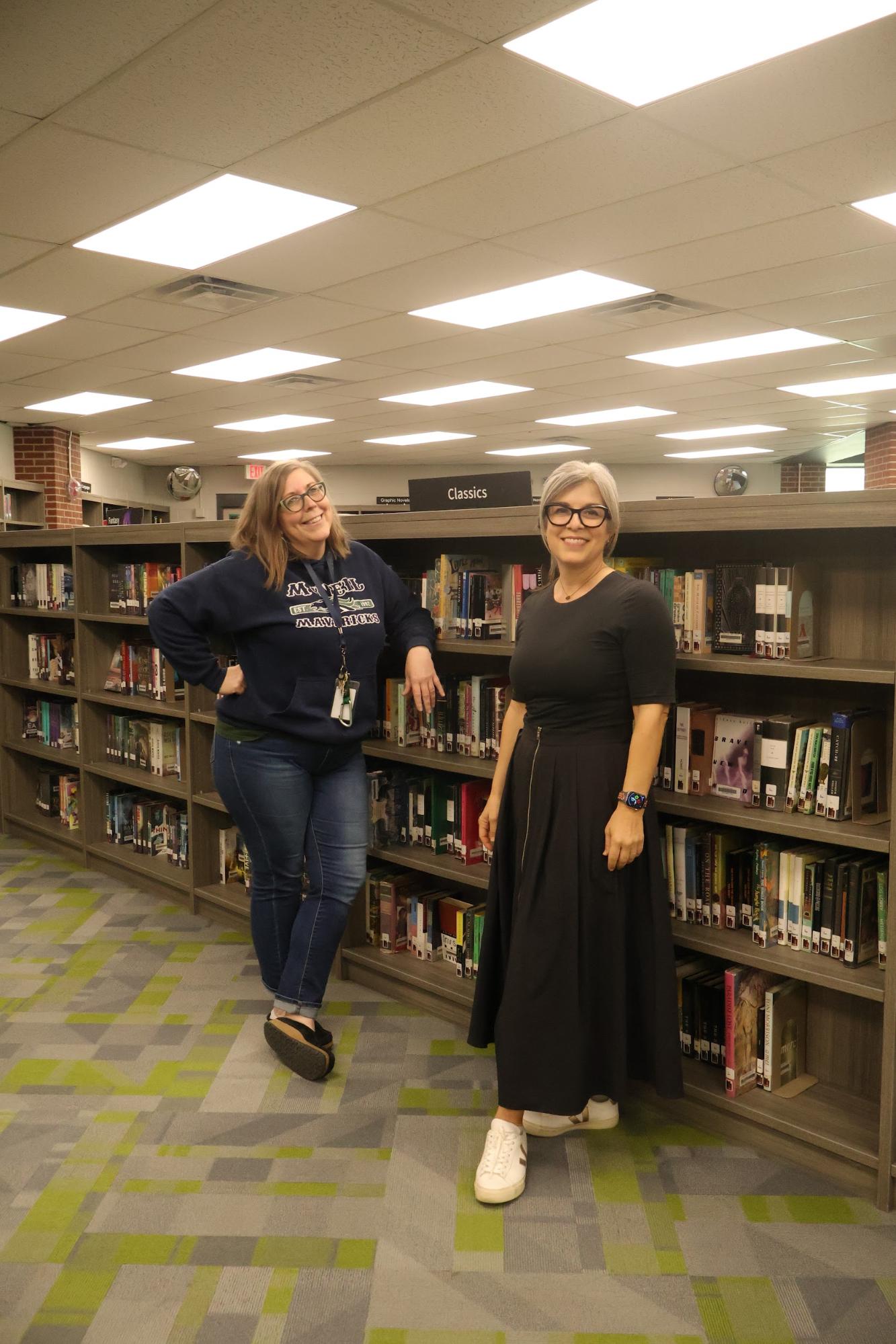
During 2013, Falli and Lewis did random days throughout the whole year called “A Year of Days,” kicking off the start of their constant library events and lessons.
“We wanted to find a way for students to interact with the library in a really positive way,” Lewis said. “We thought of all the fun stuff that we could connect to literacy and community and things like that. We saw a lot of involvement with students. While we don’t call it ‘A Year of Days’ anymore, we still do all that kind of stuff and we try to vary it.”
To plan the library events, Lewis and Falli look up national days on holiday websites. Each month they put out a calendar of each event they’re having at the library, days off, and days that the library will be closed. They plan the calendar a month in advance.
“We kind of look at things that are a little bit more academic oriented or social emotional learning,” Lewis said. “We try to do things that we think the kids will be interested in and something that we can really show we’re trying to build community and help our students through different events. It’s just a matter of finding that right balance. The whole idea is that they’re comfortable enough to come to the library, and because they’re already in the library, we want them to check out the books.”
As many library events go well, not all of them have expected outcomes. Lewis started a monthly event called “Reader’s Cafe” where students, teachers, and staff come together to read and talk about books. As the months went on, it got more difficult to be able to access certain books.
“I think students benefit from hearing what adults have to say about books,” Lewis said. “They have a different perspective on things that obviously somebody younger who doesn’t have a lot of life lessons yet. They were all mostly like young adult books and stuff like that.”
One of Falli’s favorite library events is the soap-making lunch and learn. Students learned the history of soap-making, how to make it, and the dangers of it. Each student took the sample of soap they made home.
“I thought it was so fun,” Falli said. “It was so fortuitous [and] I’m still using it. When I wash my hands, it makes me think of that. I always remember that day and it was a lot of fun.”
One of Lewis’ favorite library events is the Peep Dioramas. Students create a structure of any idea they want using candy Peeps.
“I just bought some more supplies for that, because we want to make sure nobody has to feel like they cannot participate if they don’t have supplies,” Lewis said. “We’ll get you what you need and you don’t have to pay for anything because we want you just to participate. That’s the biggest thing.”
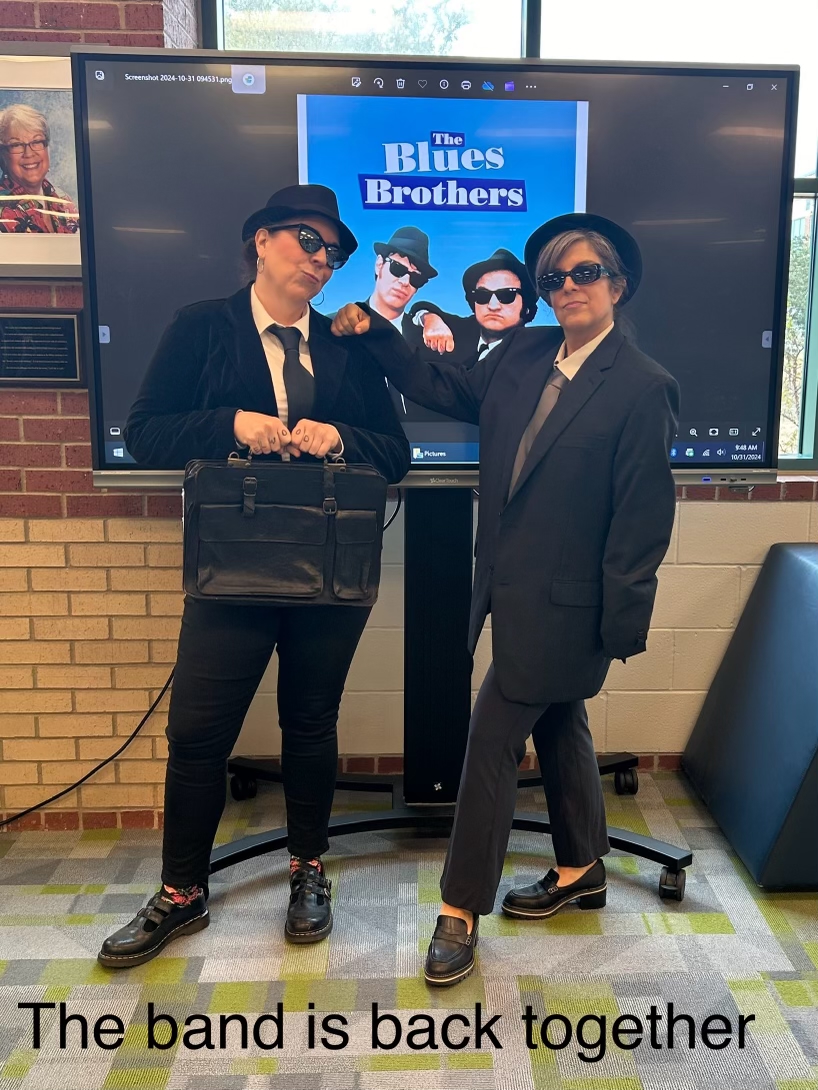
“We’re short staffed,” Falli said. “We’re averaging 770 kids a day, and there’s two of us. It cuts down on programming to a certain extent. But honestly, that just means books sit around forever. I have things to grade, I’ve got kids in front of me, and I can’t get to those things. Those are things that a library system would do.”
Due to this change, Lewis and Falli created a system where Lewis sits at the front desk on A days from 1st – 3rd period, Falli there for 4th and swapped on B days. This is so they both get alone time to concentrate on things they have to do, grading papers, adding books to the library, and budgeting.
“When we had our library assistant, Mrs. Falli and I could really concentrate on getting that stuff taken care of and really participating in that together,” Lewis said. “Some of the things that we used to like to do together, we don’t really get to do that anymore. We had a really great library assistant. She was very creative, she knew all of our systems, and she was infinitely helpful, and we really miss that.”
While being a librarian, Falli also teaches Advanced Placement (AP) research. She started teaching AP Research in 2018 when it first came to the school’s program. AP Research consists of students learning original research and time management.
“I can only do that because there’s two librarians,” Falli said. “If I was the only librarian or she were, neither one of us would be able to teach a class and run the whole library. She’s in here while I teach, so she and I have a system where one of us is always at the front desk, but we also need time in our office because we have book orders, and we have cataloging, and we have lessons to create, and I have grades to do. We organize our times so that we each have time to take care of administrative tasks.”
The school board had a meeting to talk about where to move the library with the new bond money. A student in the committee said to not move the library and to keep it where it’s at.
“The library is the heart of the school and kids need to be able to have access to it,” Lewis said. “We are kind of in the middle of everything and that’s the way we like it. I think intuitively kids know the library is a place where you can come and get your questions answered. Instinctively people know a library is here to help, so I love that about libraries.”
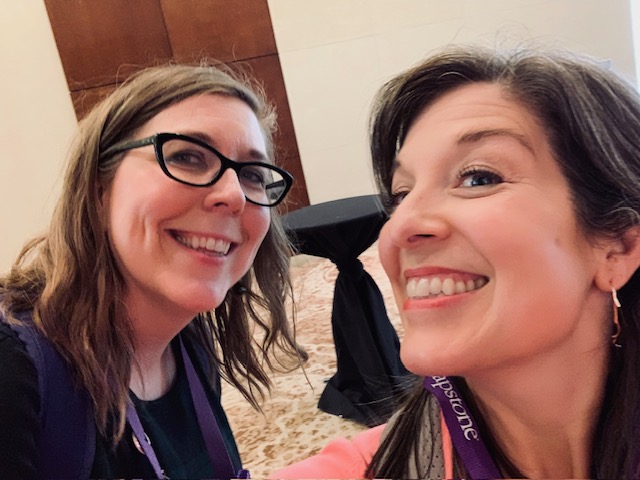
For safety protocol, Lewis and Falli have to constantly ask every student if they have a pass to be in the library.
“We understand that it bothers students when we ask them for passes,” Lewis said. “We’re one of the few places where the doors are open all day long. Every door has to be locked. You can’t prop anything open. But our doors are open all day long, and that’s how we want it because we want to be an open, safe space. But in order to be an open, safe space, we have to be making sure that students that are supposed to be on campus or adults that are here are actually really here. It’s hard, and I know kids get annoyed by that, but it’s just kind of how things are.”
During lunch, the library gets heavily populated. Students sitting at lunch on their own or with their friends. Not every student has a friend to sit with at lunch, so it’s common that students rely on the library as a place to feel included.
“I think there are a lot of kids, unfortunately, that may not feel like they have a place,” Lewis said. “If they at least feel like the library’s a place, then I feel a little bit better. That’s why we try to stay open for lunch because we want kids to feel like they have a place.”
The library will continue to host these special events, emailing once a month through school email of the monthly calendar.
“Mrs. Falli and I really get excited about our events and sometimes our feelings get hurt when people don’t come to our events,” Lewis said. “We get really excited, [but] all we can do is offer them the opportunity and if they don’t come, then that’s okay.”