One small step for man, one giant leap since 1972 for NASA.
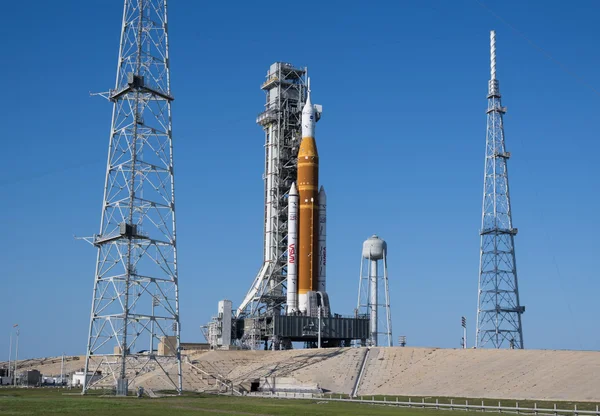
NASA’s Artemis II mission is currently underway sending four astronauts on a 10-day journey around the Moon. Astronauts Reid Wiseman, Victor Glover, Christina Koch and Jeremy Hansen blasted off on their adventure on Apr. 2 and are set to return to Earth on Apr. 10.
This is the first crewed lunar mission in over 50 years since Apollo 17 in 1972. According to CSIS.org, the United States is going back to the Moon because of its location, natural resources, and the risk of ceding generational preeminence in space to China if the United States fails to complete this mission.

In 1972, when the United States beat the Soviets to the Moon during the Cold War, NASA shuttered its crewed lunar program after the Apollo 17 mission and no man has gone to the Moon since. However, it was inevitable that we as humans would again explore the key role the Moon plays in our future.
Based on the article “What is Artemis ll?” from the National Air and Space Museum, the Artemis program will allow NASA to flight test Orion’s life-support systems with astronauts on board. This step of the program is important as NASA plans on sending more astronauts on longer-duration missions in the Artemis program’s future.
“The Artemis II test flight will confirm the systems necessary to support astronauts in deep space exploration and prepare to establish a sustained presence on the Moon,” NASA said on NASA.gov. “The primary goal of Artemis II is a crewed test flight in lunar space.”
According to NBC News, over the course of the flyby, the astronauts aboard will become the first to see parts of the lunar surface with human eyes because the far side of the moon always faces away from Earth. There they will complicate data and research about the Moon’s surface in hopes of building a base on the Moon.
The hopeful success of Artemis ll will bring NASA to launch the Artemis lll mission next year, which will conduct a technology demonstration in low-Earth orbit with the commercially built Moon landers developed by organizations like SpaceX and Blue Origin.
“Astronauts on their first flight aboard NASA’s Orion spacecraft will confirm the spacecraft’s systems operate as designed with crew aboard in the actual environment of deep space.” NASA said in reference to a question response on NASA.gov. “The unique Artemis II mission profile builds on the uncrewed Artemis I flight test by demonstrating a broad range of SLS (Space Launch System) and Orion capabilities needed on deep space missions. This mission will verify Orion’s life support systems can sustain astronauts on longer-duration missions ahead and allow the crew to practice operations essential to Artemis III and beyond.”
The final step of the Artemis program will be the launch of Artemis lV in 2028 with the hopes of finally landing on the Moon once again.