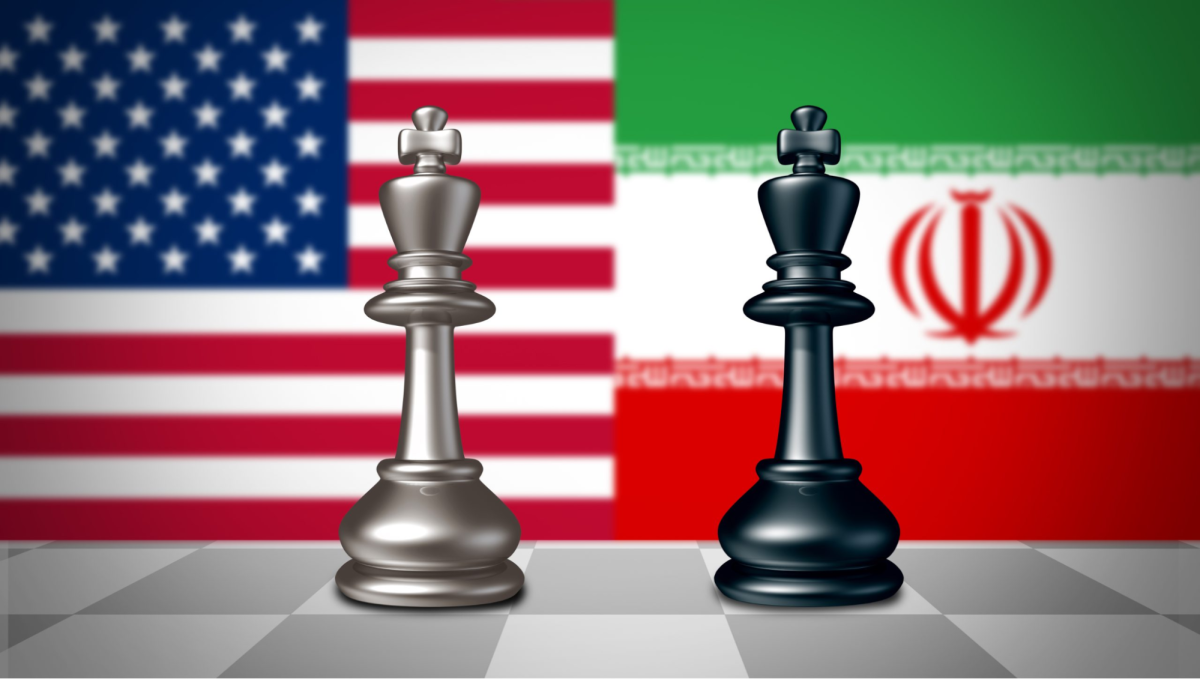
Despite Donald Trump’s previous threats, the Iran regime and U.S. have come to a temporary, 14-day agreement in which Israel, the U.S., and Iran should suspend all attacks in order to negotiate terms for a permanent solution.
The conflict started on Feb. 28 and, prior to the ceasefire, included attacks on leaders, vital military infrastructure, and countless bases across the Middle East. Prior to the attacks, President Trump voiced his frustrations regarding Iranian nuclear programs, hence the attacks later on.
This also served as the president’s reasoning for the confrontation, claiming that his goal is “eliminating imminent threats from the Iranian regime.” Following the conflict in June of last year—that occurred for more or less the same reason—it was believed that Iran began strengthening their nuclear weaponry. Acting on the administration’s “indicators” that Iran was preparing an attack, Trump decided to strike preemptively to avoid the damages that were warranted had Iran struck first.
And after nearly forty days of warfare, the ceasefire, though implemented on Apr. 7, seems to already lack overall stability. This stems from the disagreement over the included fronts, mainly Lebanon. In addition, several strikes upon Gulf nations, Lebanon, and Iran show the disregard for the agreement.
This disregard has been justified by the factor of this being a conditional agreement, and the failure to adhere to those conditions on many fronts. On one hand, the US demanded that the Strait of Hormuz be reopened, while Iran insisted on maintaining the limited control. On the other, Iran’s 10-point condition plan has been considered demanding by opposing nations. Components of this plan include the withdrawal of US troops from the Middle East, the acceptance of a nuclear enrichment program, compensation for war damages, along with a handful of more general conditions.
Needless to say, the reliability of the agreement has failed to prove itself and tensions continue to rise among the involved nations. As the attempt at just a temporary truce fails to work, a permanent solution feels less like a possibility in the near future.