Something that impacts nearly everybody is gas and its prices. According to community affairs, “It’s estimated that as of 2025, there are over 242 million licensed drivers in the U.S., and about 86% of Americans ages 25 and older have a driver’s license.” Not only does this impact Americans over 25, it also impacts teen drivers who pay for their own gas.
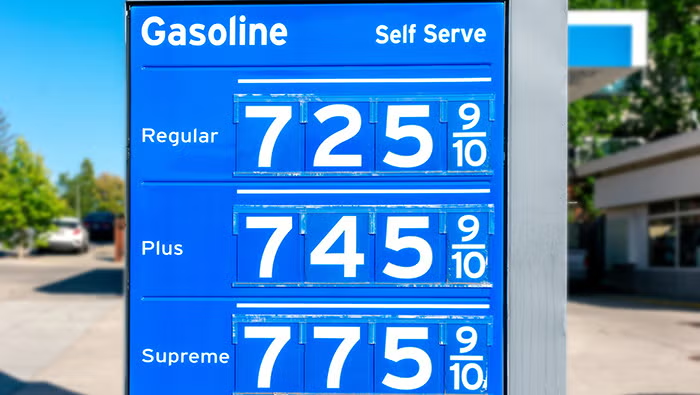
The average cost of gas is $4.059 a gallon, which is a drastic change from the previous price average of $2.80-3.00 earlier in 2026. A one dollar difference might not sound so big, but when put into perspective it’s a 30-35% increase. There has not been a comparable jump in the prices like this since 2022, when prices went from $3.30 to $5.00, and the reasoning behind it is very similar to why it is also happening now. The reason the prices went up in 2022 was because of the Russian Invasion in Ukraine, causing countries to stop buying oil from Russia (one of the world’s biggest oil producers.)
“On Saturday I noticed it hit the five dollar mark and that when I really started freaking out,” senior Crhis Mejia said, “In March I went to get gas after going to the gym, and I was surprised when the price went up from a dollar to like four dollars.”
In the present day though, the situation of gas prices jumping also has to do with foreign relations. The Middle East geographically is at a prime spot for oil production, and more specifically Iran is located near the Strait of Hormuz, one of the most vital shipping routes globally transporting 20% of the world’s oil. With the conflicts between the U.S. and Iran, that chokepoint has significantly limited the amount of ships travelling through there daily. 120 to over 130 ships used to travel through there daily, but it dropped to the small number of five-eight recently.
“Yesterday I think I spent around 60 dollars for only half a tank,” Mejia said. “[the price increase] doesn’t really change the way I drive, but it probably should.”
Though the U.S. is claimed to be “the number one oil and gas producer in the world” from current President Donald Trump, that’s not exactly true. The U.S. produces mass amounts of crude oil which is an ingredient to high gas prices, not its whole. Factors like refining costs, transportation, taxes, profit margins, etc. also impact the prices. Another reason why the prices are so high even though we make it domestically, is the oil is not kept in the U.S. fully. The U.S. sells to whoever can purchase, limiting the amount of oil used in the U.S. increasing the prices nationally.