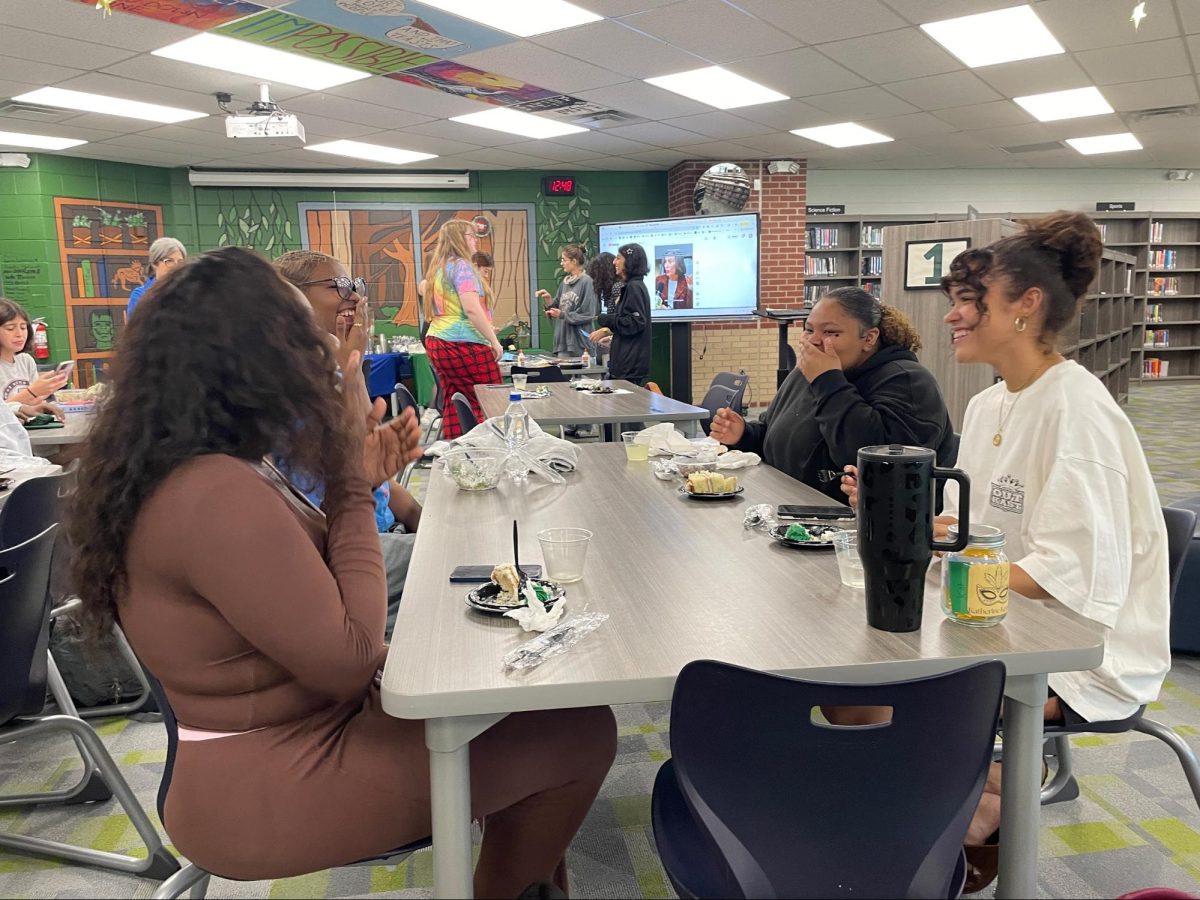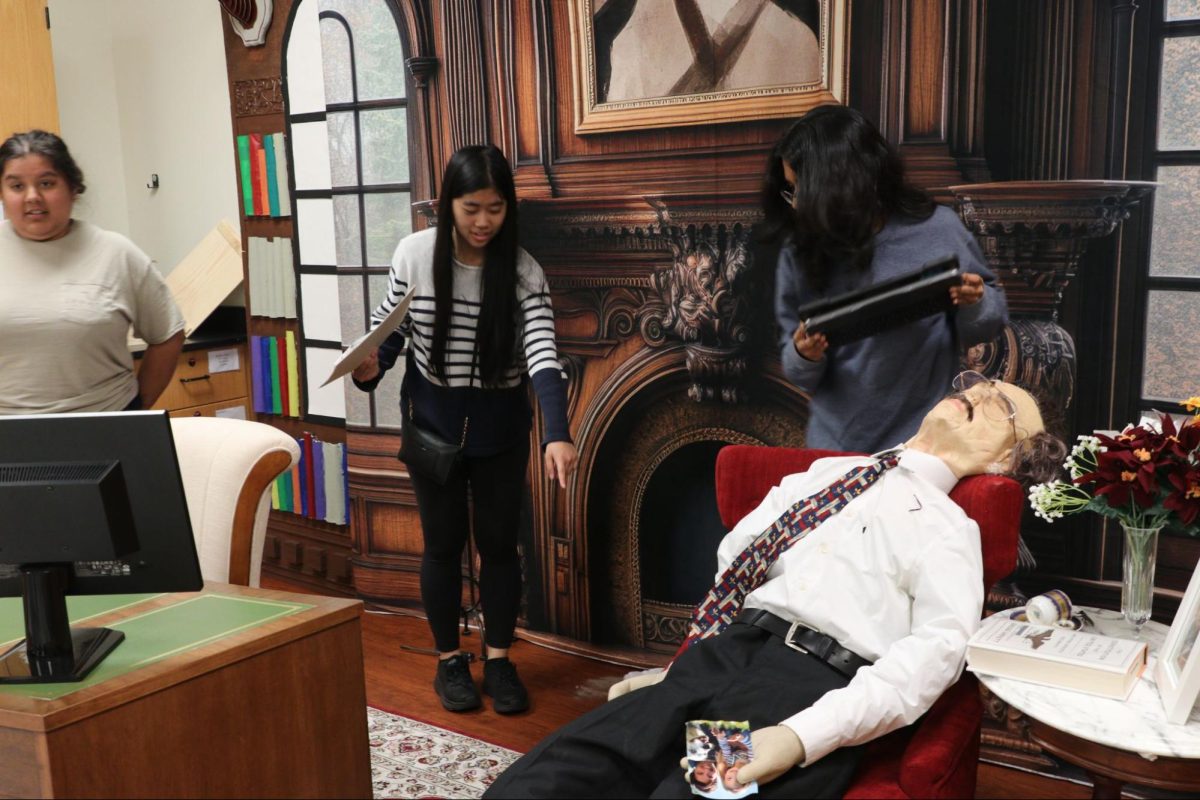
Forensic Science students conducted their Hair Lab on Nov. 10 through Nov. 13, marking the beginning of the trace evidence portion of their ongoing crime scene investigation.
The Hair Lab introduces students to one of the most common and informative types of evidence found at crime scenes. This stage focuses on identifying the characteristics of hair and fibers and determining which samples may match evidence found near the staged Judge Holmes crime scene.
“To learn what characteristics are used by forensic scientists as to the identity of the owner of the hair,” forensic teacher Carol Seng said. “We are looking at dog, cat, horse, rabbit, cow, bat [hair] and our persons of interest. We will then compare the hair fibers left behind at the Judge Holmes crime scene and identify who or what left them behind.”
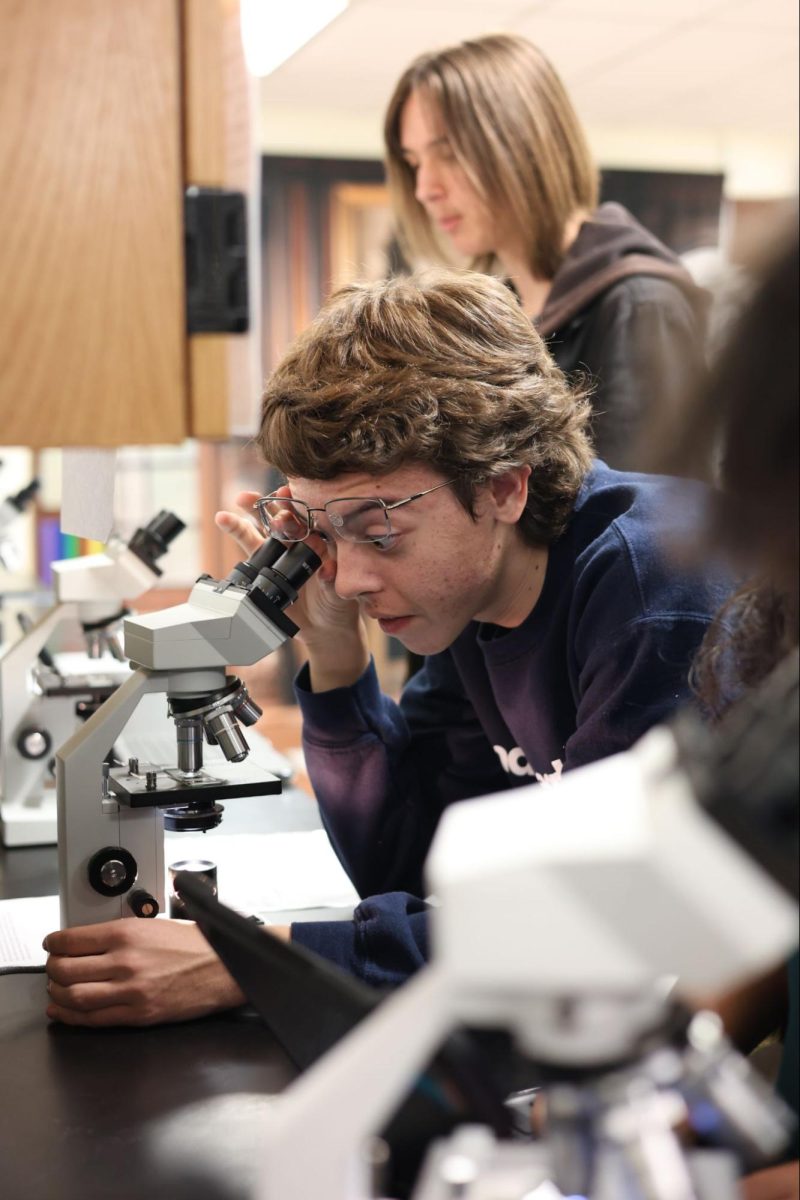
Students used light microscopes to examine hairs and dissecting microscopes to study fabric fibers and weave patterns. Seng said she taught students to identify the three parts of the hair shaft, including the medulla, cortex and cuticle, along with the specific medulla and cuticle types that help determine which animal a hair came from.
Seng said hair can play a significant role in real forensic investigations because the presence of follicular tags and mitochondrial DNA can help narrow suspects and even support cold case analysis years later. She emphasized that visual inspection helps students eliminate samples before DNA testing, which is more expensive and time consuming.
Students also practiced microscope skills, including focusing and comparing samples. Seng said many students were surprised to see details of their own hair under magnification.
“[Looking at] what their hair looks like under a microscope,” Seng said. “Split ends and hair color seem to bring the biggest discoveries. Of the samples I provide, what bat hair looks like.”
Compared to earlier stages such as sketching or evidence collection, Seng said the Hair Lab felt more familiar and accessible to students because many have used microscopes before. She added that this lab helps students begin narrowing down their list of persons of interest.
“Students can start to sort the persons of interest into helpful people and people who might have committed the crime,” Seng said.
With the Hair Lab completed, students will move on to studying fibers and learning how fabric evidence can further connect individuals to the scene.