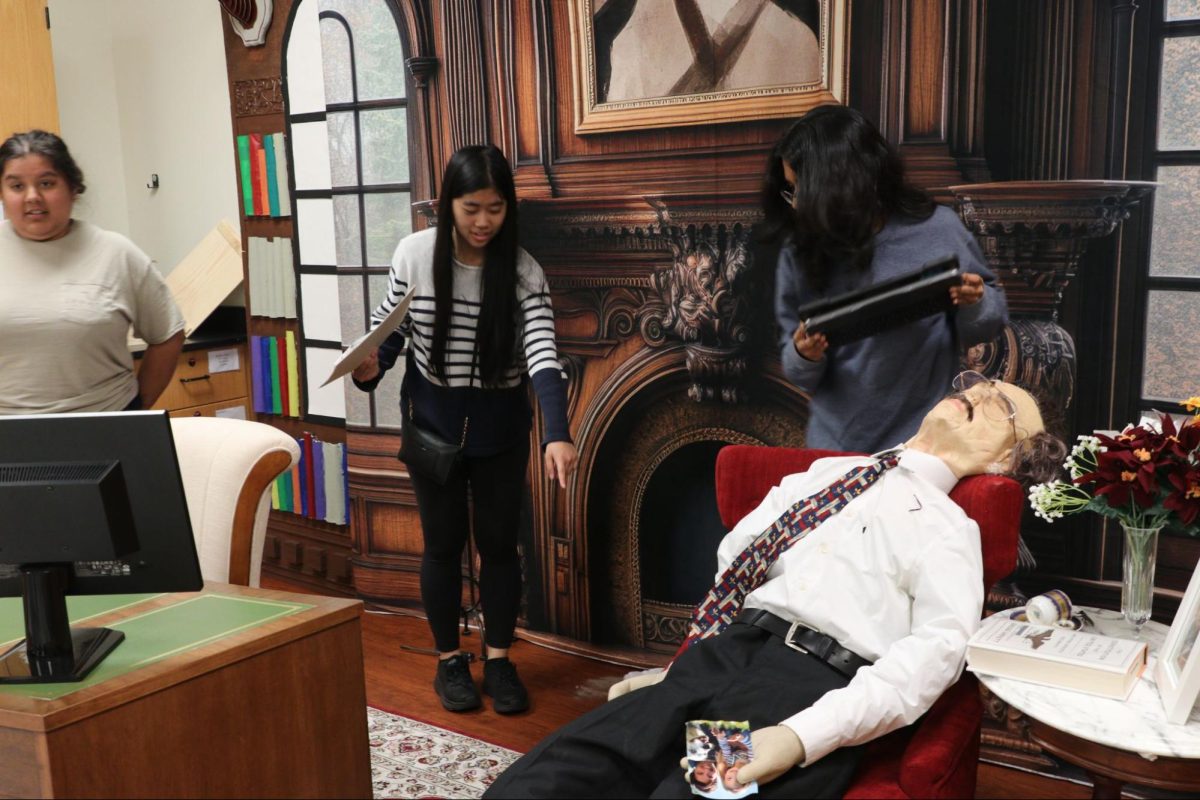

Students in business management class recently participated in a five-part debate that challenged them to think critically about ethics, legality and personal values through discussion and reflection.
“This debate has helped me speak clearly and confidently in front of my peers,” junior Jenelia Singarayakumar said. “Although I was nervous to speak at first, the more I talked, the more confident I became.”
The debate began with students reading an ethical case study called “Affirmative Action vs. Client Wishes,” which follows an employee who must choose between accepting her dream job or staying true to her moral beliefs.
“I believed that it was wrong to replace the actors because it is legally and morally wrong,” Singarayakumar said. “For example, the Civil Rights Act of 1964 prohibits discrimination.”
After reviewing the case study, students completed parts one through three of the project, where they answered guided questions and chose which side of the ethical dilemma they supported.
“One thing I learned from this debate was that when someone shows unethical behavior, there’s a large chance it might be illegal,” sophomore Aditi Gupta said. “You should always do your research about how the law may apply to the situation before making a decision.”
Part four of the project involved a live class debate, where students presented opening arguments, rebuttals, and closing statements while responding to opposing viewpoints.
“If we recast the actors, we’d be violating the Civil Rights Act of 1964 and facing huge backlash from the community,” Gupta said. “It’s also morally wrong because it is everyone’s responsibility to keep opportunities equal for minorities.”
Following the debate, students completed a final reflection explaining whether their views had changed after hearing both sides of the argument.
“These debates are valuable because they help students analyze real-world problems and work through their ideas in a safe place with their peers,” Business Management Teacher Ryan Norwood said. “They get challenged on their position and begin forming what they want to stand for.”
Norwood said he is consistently impressed by student participation during these discussions.
“One of the most enjoyable parts for me,” Norwood said, “is when some of my quieter students come alive in the discussion and get animated while delivering an argument.”